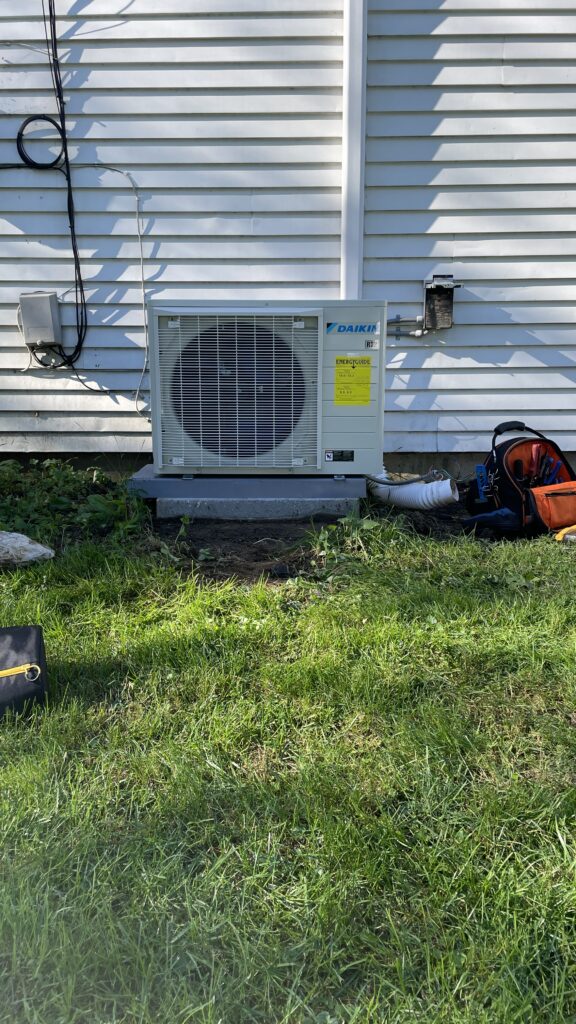
Heat pump installation & replacement • Camp Hill, PA
Heat Pump Installation & Replacement in Camp Hill, PA
Compare standard heat pumps, quiet inverter systems, cold-climate options, and dual-fuel designs with a local team that evaluates the home before recommending the equipment.
- Proper sizing instead of copying the old tonnage
- Heat-pump and dual-fuel options explained clearly
- Airflow, ductwork, and electrical needs reviewed
- No-pressure recommendations before you decide
Based in Camp Hill and serving Mechanicsburg, Lemoyne, New Cumberland, Enola, Harrisburg, Carlisle, Hershey, Hummelstown, Lebanon, and nearby Central Pennsylvania communities.
Measured. Matched. Explained.
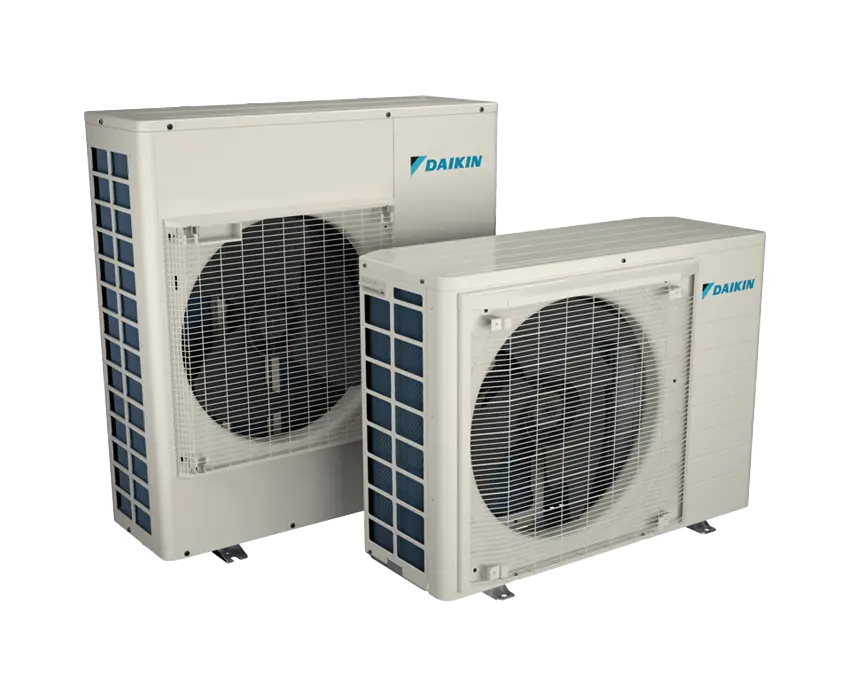
Heat-pump equipment shown for comparison; final selection depends on the home.
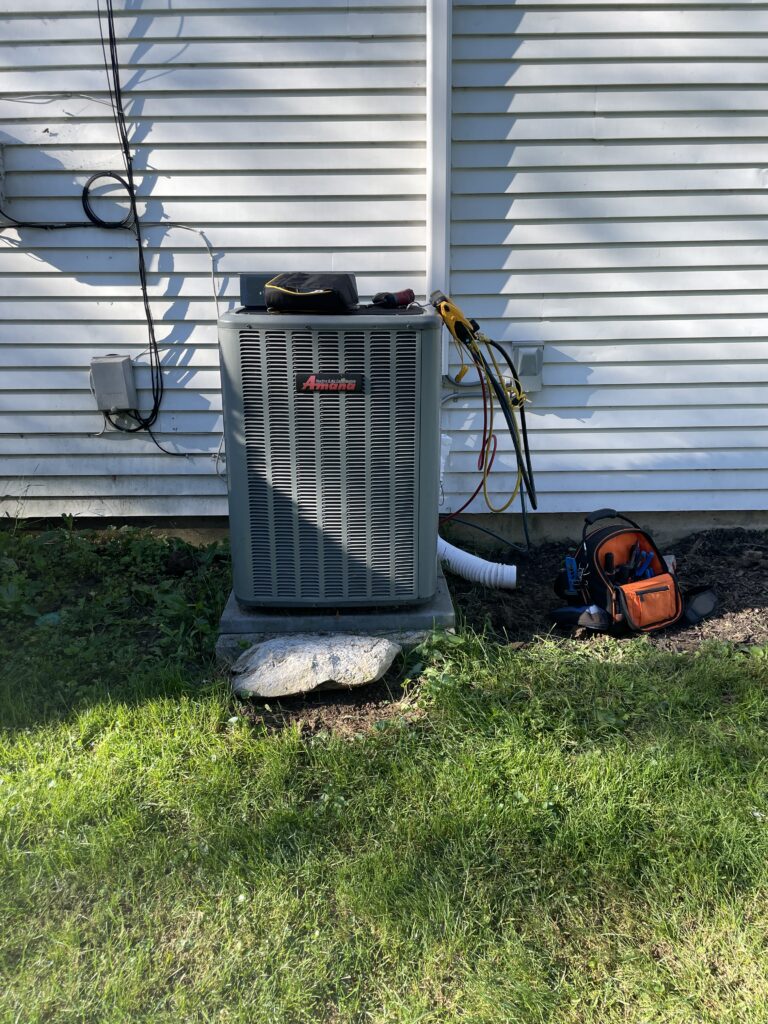
Heat pump buying guide
Compare Heat Pump Options for Your Central Pennsylvania Home
A heat pump can heat and cool the home, but the right design depends on the existing fuel source, winter comfort expectations, ductwork, electric service, and budget. Compare the four paths Metro HVAC most often reviews for heat-pump installation and replacement projects around Camp Hill.
Your preliminary starting point
Answer the three quick questions above to organize your options.
This is not a final equipment recommendation. It simply moves the most relevant path to the front before Metro evaluates the home.
Value-focused path
Standard Heat Pump
A practical whole-home heating and cooling option for homeowners who want dependable operation and a lower equipment investment than many premium variable-capacity systems.
- Provides central heating and cooling through one outdoor system
- Can be matched with an air handler or eligible indoor equipment
- Available in single-stage and two-stage configurations
What to know: Standard systems generally cycle more noticeably and may not provide the same sound, humidity, or temperature-control advantages as an inverter system.
Premium comfort path
Daikin FIT Inverter Heat Pump
A compact side-discharge system that continuously adjusts output instead of operating only at full capacity. Metro may compare qualifying Daikin FIT DH6 or DH7 matched systems based on the home and capacity required.
- Variable inverter operation adapts to changing comfort demand
- Slim side-discharge design can fit tighter outdoor locations
- Communicating controls and matched indoor options may be available
What to know: The outdoor unit, indoor equipment, controls, and AHRI-rated combination all matter. The model number alone does not define the final efficiency or comfort result.
Winter-performance path
Cold-Climate Heat Pump
A higher-winter-performance path for homeowners considering all-electric comfort or reducing dependence on oil, propane, or electric resistance heat. Metro verifies the exact certified matched system before quoting it.
- Designed to maintain stronger heating performance in colder weather
- May support an all-electric comfort strategy when the home is suitable
- Qualifying ENERGY STAR Cold Climate options can be reviewed
What to know: Cold-climate equipment still requires load calculations, airflow verification, electrical review, and a planned supplemental-heat strategy when appropriate.
Hybrid comfort path
Dual-Fuel Heat Pump
A heat pump paired with a gas furnace. The heat pump handles heating and cooling when it makes sense, while the furnace provides backup heat based on the system design, controls, and selected changeover strategy.
- Heat-pump heating and cooling during suitable outdoor conditions
- Gas-furnace backup when the designed changeover calls for it
- Can be paired with qualifying inverter heat-pump configurations
What to know: The furnace, coil, outdoor unit, thermostat, airflow, and changeover settings must be designed as one matched system.
Metro HVAC design check
The best equipment choice starts with the home—not a model number.
Before finalizing a recommendation, Metro reviews the load, existing system, fuel source, comfort problems, ductwork, airflow, electrical requirements, outdoor placement, matched equipment, and available incentive path.
- Heating and cooling load
- Ductwork and static pressure
- Electric service and heat kits
- Indoor and outdoor equipment match
- Backup-heat strategy
- AHRI and incentive eligibility
Your selected comparison path
No option selected yet
Choose an option above. Your selection will be saved with the answers from the first section for the next step of the evaluation.
This comparison is educational and is not a final load calculation, equipment selection, rebate determination, or price quote. Product availability, rated performance, warranty coverage, incentive eligibility, and backup-heat requirements depend on the exact matched system and project conditions. Qualifying registered Daikin systems may include enhanced limited-warranty coverage; complete manufacturer terms and registration requirements apply.
Your free heat-pump evaluation
Get Your Heat Pump, Rebate & Payment Options
Tell Metro HVAC where the home is and how to reach you. We will review the selected system path, current heating setup, utility information, comfort goals, and project timing before discussing the next step.
Your heat-pump evaluation request is in.
A Metro HVAC team member will review the home and system information before contacting you about the next step.
Request reference: Pending
Scheduling availability, equipment recommendations, incentives, warranty eligibility, and pricing are confirmed after Metro reviews the project.
Central Pennsylvania winter performance
Do Heat Pumps Work in Pennsylvania Winters?
Yes—modern heat pumps can provide dependable winter comfort for many homes around Camp Hill and South Central Pennsylvania. The important question is not simply whether a heat pump can run in cold weather. It is whether the exact matched system can carry the home’s heating load, move the required airflow, and use the right backup strategy when temperatures fall.
What changes as outdoor temperatures fall?
A properly designed system follows a planned comfort strategy instead of relying on one generic changeover temperature.
Milder winter conditions
Heat-pump-led comfort
The heat pump handles the heating demand while also providing the home’s cooling in summer. Inverter systems can adjust output more gradually to reduce temperature swings and unnecessary cycling.
Colder conditions
Low-temperature capacity matters
As the heating load rises, the system’s actual low-ambient output becomes more important than the headline efficiency rating. Cold-climate and variable-capacity equipment may maintain stronger output than a basic system, but the exact certified match must be verified.
Design conditions
The backup plan supports the home
Depending on the home and selected system, supplemental electric heat or a gas furnace can support the heat pump. Controls, balance point, heat-kit staging, and dual-fuel changeover should be designed as part of the complete system—not decided after installation.
Metro HVAC winter design check
Six items we verify before promising winter comfort
A heat pump should be selected as part of a complete home-comfort design. Metro evaluates the conditions that determine whether the system will actually perform as expected.
Heating load
How much heat the home needs during local winter design conditions—not the tonnage printed on the old unit.
Low-temperature output
The matched system’s capacity data at colder outdoor temperatures, including the applicable cold-climate certification path.
Ductwork and airflow
Static pressure, return capacity, supply delivery, filter selection, and whether the duct system can move the required air quietly.
Backup-heat strategy
Electric auxiliary heat, gas-furnace backup, or an all-electric design based on the home, equipment, comfort goals, and project scope.
Electrical capacity
Panel capacity, breaker and conductor requirements, disconnects, and any heat-kit load required by the final design.
Controls and commissioning
Thermostat logic, defrost behavior, balance-point settings, staging, refrigerant setup, airflow verification, and final performance testing.
Cold-weather questions homeowners ask
Straight answers before you choose a system
Open each question for the practical answer Metro uses during a heat-pump evaluation.
At what temperature does a heat pump stop working?
There is no single shut-off temperature for every heat pump. Output and efficiency change as outdoor conditions change. Qualifying cold-climate systems are designed and tested for stronger low-temperature performance, and many continue operating below 5°F. The exact capacity, control settings, and backup plan must be checked for the specific matched system.
Does every heat pump need backup heat?
Not every home uses the same backup strategy. Some all-electric systems use staged electric auxiliary heat. Some homes can use a cold-climate system with a carefully designed supplemental plan. Homes with natural gas may benefit from dual fuel. Metro compares the home’s load and the equipment’s low-temperature output before recommending the approach.
Can a heat pump completely replace my furnace?
In some homes, yes. In others, keeping or replacing a gas furnace as part of a dual-fuel system may provide the better balance of operating cost, winter comfort, electrical requirements, and backup confidence. The answer depends on the house and the exact equipment—not a universal rule.
Will heat-pump air feel colder than furnace heat?
A heat pump often supplies air at a lower temperature than a gas furnace and runs for longer cycles. That does not mean the home is underheated. Proper airflow, duct location, thermostat setup, sizing, and variable-capacity operation all affect how comfortable the heat feels at the registers and throughout the rooms.
Why does a heat pump go into defrost mode?
During cold, damp weather, frost can form on the outdoor coil. Defrost is a normal operating cycle that temporarily clears that frost so the system can continue transferring heat. The indoor system and backup-heat strategy should be configured to maintain comfort during those cycles.
Build the winter plan around your home
Compare a standard, cold-climate, or dual-fuel design with Metro HVAC.
Start with the system paths above or send Metro the home and project details already collected in your heat-pump evaluation.
Heat-pump operation, heating capacity, auxiliary-heat use, dual-fuel changeover, energy cost, warranty eligibility, and incentive eligibility depend on the exact equipment match, home conditions, utility rates, controls, and installation. Metro HVAC confirms the project design before quoting or promising performance.
Daikin FIT heat-pump options
Quiet inverter comfort—matched to the way your home heats.
Daikin FIT is not one universal system. Metro HVAC compares the outdoor heat pump, indoor equipment, controls, winter strategy, ductwork, and electrical requirements before recommending a DH6, cold-climate DH7, or another qualifying Daikin path.
- Adaptive inverter operation
- Compact side-discharge cabinet
- Two-way communicating technology
- R-32 ducted platform

Two Daikin starting points
Compare year-round inverter comfort with a cold-climate priority.
Both paths require an approved indoor match and complete home design. Selecting a card carries your preference into the heat-pump evaluation already on this page.
Daikin FIT DH6VS family
Daikin FIT Inverter Heat Pump
A compact all-electric ducted system for homeowners who prioritize quieter outdoor operation, steadier temperatures, a smaller footprint, and variable-capacity comfort.
Strong starting point for: replacing an existing heat pump, improving part-load comfort, or fitting equipment into a tighter outdoor location.
- Up to 19 SEER2 and 8.8 HSPF2 on qualifying matched systems
- Adaptive inverter operation instead of only full-output cycling
- Two-way communicating capability with compatible indoor equipment
- R-32 refrigerant and capacities from 1.5 to 5 tons
Published ratings are “up to” values. Final performance depends on capacity, indoor equipment, controls, AHRI match, installation, ductwork, and home conditions.
Daikin FIT DH7VS family
Daikin FIT Cold-Climate Heat Pump
A cold-climate FIT path for suitable homes where low-temperature heating performance is a major priority, including all-electric projects and fuel-conversion conversations.
Strong starting point for: winter-focused replacements, reducing oil or propane use, or comparing all-electric and dual-fuel designs.
- Daikin identifies the DH7VS as a cold-climate heat-pump platform
- Up to 19 SEER2 and 8.8 HSPF2 on qualifying matched systems
- Adaptive inverter operation and communicating technology
- Backup heat, balance point, airflow, and electrical needs remain part of the design
“Cold climate” does not replace a load calculation, low-temperature capacity review, matched equipment verification, or supplemental-heat planning.
Metro designs the Daikin system as one matched package.
The outdoor model alone cannot determine final efficiency, winter output, airflow, humidity control, warranty, incentive eligibility, or comfort.
Outdoor heat pump
Capacity, inverter range, low-ambient output, location, line set, clearances, and service access.
Indoor equipment
Compatible air handler, coil, or furnace; blower capability; heat kit; filtration; and condensate design.
Controls and sensors
Communicating thermostat, defrost, auxiliary heat, dual-fuel changeover, staging, and diagnostics.
The home itself
Manual J load, ductwork, static pressure, airflow, electric service, fuel source, and comfort priorities.
What communicating inverter design can improve
Compatible components can share operating information and adjust more gradually than a basic on/off system.
- Steadier temperatures and fewer abrupt cycles
- Longer part-load operation that may support humidity control
- Coordinated airflow, compressor output, and backup heat
- Operating feedback that can support setup and diagnostics
Turn the comparison into a home design
Have Metro compare FIT, cold-climate, and backup-heat options for your home.
Your answers from the top of the page carry into the dedicated evaluation. Metro reviews the match, winter capacity, controls, ductwork, electrical needs, warranty path, and available savings before quoting.
Product availability, ratings, sound, heating capacity, indoor-equipment compatibility, AHRI certification, warranty coverage, incentive eligibility, and performance depend on the exact model, matched combination, controls, installation, home conditions, registration, maintenance, and current manufacturer or program terms.
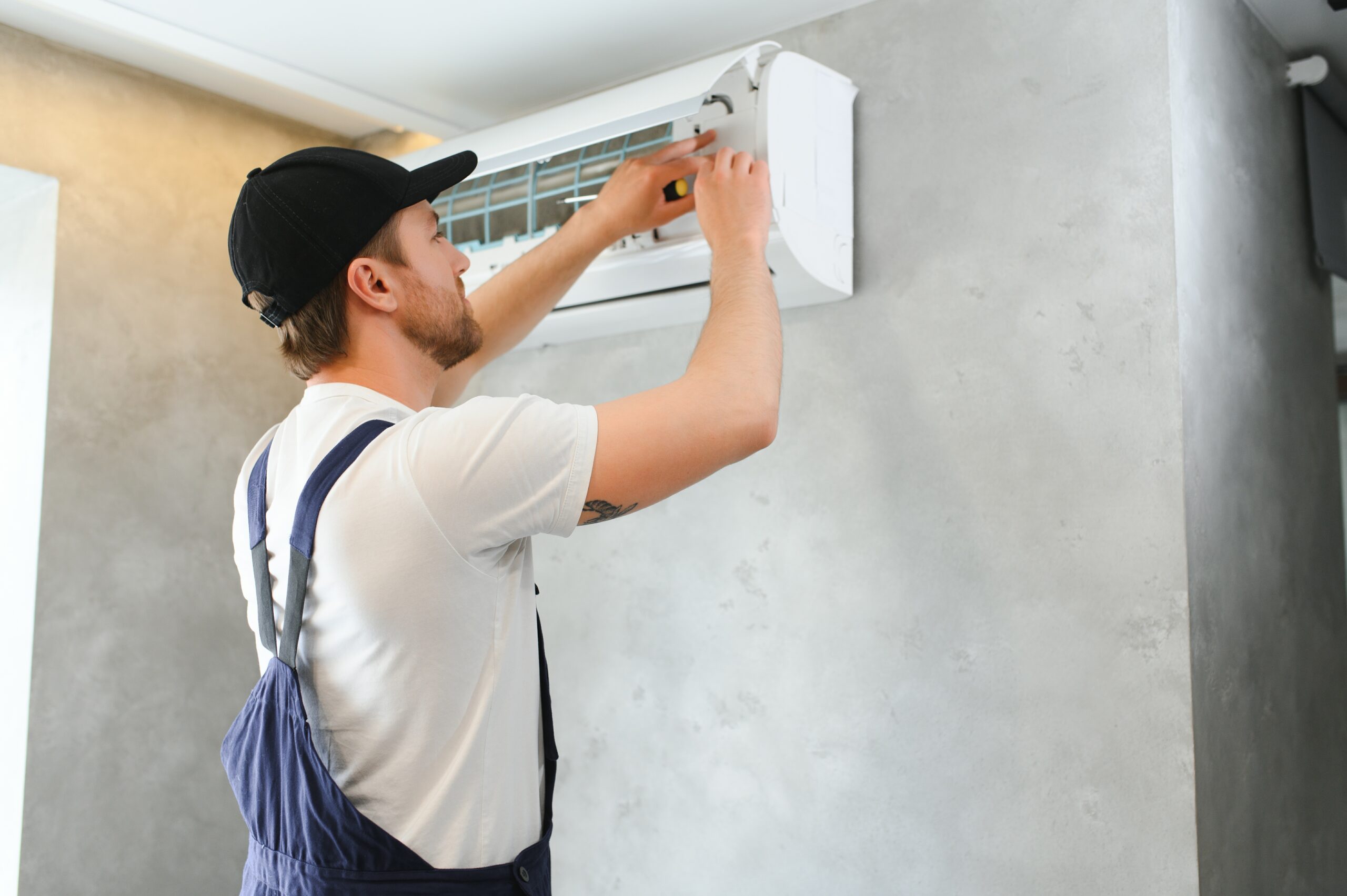
Proper sizing and verified performance
A High-Efficiency Heat Pump Is Only as Good as the Design Behind It.
The outdoor model number does not tell the whole story. Metro HVAC evaluates the home’s heating and cooling load, selects compatible indoor and outdoor equipment, reviews airflow and electrical needs, verifies the certified system match, and commissions the completed installation before calling the project finished.
Metro’s five-part heat-pump design and verification process
Each step answers a different question. Skipping one can create a system that looks efficient on paper but does not deliver the expected comfort, sound, airflow, winter performance, or incentive eligibility in the home.
Manual J load
Measure what the home needs
Review construction, windows, insulation, orientation, infiltration, room conditions, and local design temperatures instead of copying the old equipment size.
Equipment selection
Match capacity to the load
Compare heating and cooling performance at the conditions that matter, including variable-capacity range, low-temperature output, auxiliary heat, and dual-fuel strategy.
Airflow and infrastructure
Verify the home can support it
Review return and supply capacity, static pressure, filtration, condensate, line set, outdoor placement, electrical service, breakers, conductors, and heat-kit requirements.
Certified system match
Confirm AHRI and ENERGY STAR data
Verify the outdoor unit, indoor coil or air handler, furnace when applicable, and certified ratings as one approved combination—not as unrelated model numbers.
Commissioning
Test the installed system
Confirm airflow, static pressure, refrigerant setup, controls, thermostat logic, backup heat, defrost, drainage, and operating performance before the homeowner walkthrough.
Before you approve the project
Ask for the details that make the proposal verifiable.
A clear proposal should let you understand exactly what is being installed, what performance is being represented, and what work is included around the equipment.
Exact model numbers
Outdoor equipment, indoor coil or air handler, furnace when applicable, thermostat, heat kit, and major accessories.
AHRI reference or certificate
The certified reference identifying the exact matched system and its published efficiency ratings.
Load and sizing basis
The heating and cooling design loads and the reason the proposed capacity and backup strategy fit the home.
Duct and airflow scope
Required return, supply, filtration, transition, balancing, or static-pressure corrections—not vague “minor ductwork.”
Electrical and controls scope
Breaker, conductor, disconnect, surge protection, heat-kit, thermostat, communicating controls, and changeover logic.
Warranty and incentive path
Registration responsibilities, labor coverage, maintenance conditions, qualifying documents, and who submits each item.
It is the unique reference used to identify a certified matched equipment combination. It helps verify that the represented performance belongs to the complete system—not only the outdoor unit.
Efficiency language made useful
What SEER2, EER2, and HSPF2 actually tell you
These ratings help compare certified equipment, but they do not replace home sizing, low-temperature capacity review, airflow, or installation quality.
Seasonal cooling efficiency
A laboratory-based seasonal rating used to compare cooling efficiency for a certified system combination.
Cooling performance at a test condition
A point-in-time efficiency measure that can help compare operation during hotter outdoor conditions.
Seasonal heating efficiency
A laboratory-based seasonal heating rating. Winter comfort still depends on capacity at local outdoor conditions and the home’s heating load.
Important: a higher headline rating does not prove that the system is correctly sized, that the ductwork can move the air, or that a particular rebate or tax-credit rule is satisfied. The exact certified match and current program requirements must be checked.
Heat-pump sizing and installation questions homeowners ask Google
Open each question for the practical answer Metro uses when reviewing a replacement or new heat-pump project.
What size heat pump does my house need?
The correct size is based on the home’s heating and cooling loads, the selected equipment’s performance at design conditions, and the airflow the duct system can support. Square footage and the old unit’s tonnage are not enough by themselves.
Is a bigger heat pump better?
Not automatically. Oversizing can contribute to shorter cycles, less consistent temperature control, weaker humidity removal, unnecessary equipment cost, and ductwork or sound problems. Variable-capacity equipment still needs a deliberate selection based on its minimum and maximum output ranges.
Why does the indoor unit affect the efficiency rating?
A split heat-pump rating belongs to a certified combination of components. The coil, blower or air handler, furnace when used, controls, and outdoor unit affect the certified system performance. An outdoor model cannot establish the complete rating on its own.
Does ENERGY STAR automatically mean I get a rebate?
No. ENERGY STAR certification may be one requirement, but rebate and tax-credit programs can also require a specific product list, certified match, efficiency tier, installation date, utility account, contractor documentation, and current program funding.
Will new equipment fix undersized or leaky ductwork?
New equipment cannot fully correct a duct system that cannot move or contain the required airflow. Returns, supplies, transitions, filters, leakage, balancing, and static pressure may need to be addressed as part of the installation scope.
What should be tested after a heat pump is installed?
The final checks should match the project, but commonly include airflow, static pressure, temperature operation, refrigerant setup, electrical operation, condensate drainage, thermostat and communicating controls, auxiliary or dual-fuel heat, defrost, and homeowner operation.
Get a design you can understand
Ask Metro to review the load, equipment match, airflow, electrical needs, and documentation before you choose.
Your heat-pump evaluation already carries your home, comfort goal, utility, timing, and selected system path. Add a design-and-match review to the request without leaving this page.
Load calculations, equipment selection, certified ratings, ENERGY STAR status, warranty coverage, rebates, tax credits, and final performance depend on the exact project, equipment combination, current program requirements, controls, ductwork, electrical conditions, installation, registration, and commissioning. Metro HVAC confirms applicable details in the written proposal and project documentation.
Why Homeowners Choose Metro HVAC for Heat Pump Systems
Homeowners choose Metro HVAC because we focus on system performance, honest guidance, and long-term comfort.
Experienced, certified technicians
Proper system sizing and installation
Clear explanations without pressure
Trusted equipment from manufacturers like Goodman, Amana, Daikin, Rheem, and Bosch IDS
We help homeowners understand their options — not push a specific solution.
Are Heat Pumps a Good Fit for
South Central Pennsylvania?
Heat pumps can be an excellent option for many homes in this region, but they aren’t the right solution for every situation.
Heat pumps are often a good fit for:
Homes looking to improve energy efficiency
Homeowners interested in both heating and cooling from one system
Well-insulated homes
Moderate winter heating demands
In colder conditions, some homeowners choose to pair a heat pump with a secondary heat source for added comfort and reliability.
We help homeowners evaluate whether a heat pump makes sense based on their home, usage, and long-term goals.
Heat Pump
Installation & Replacement
We provide professional heat pump installation and replacement for new systems and upgrades. Proper sizing, system selection, and installation quality are critical to long-term performance and comfort.
If you’re replacing an existing system, we’ll help you compare heat pump options against other heating solutions so you can make an informed decision.
Learn more about Heating Installation
Learn more about Heating Replacement
Hybrid (Dual-Fuel) Heat Pump Systems
Hybrid, or dual-fuel, systems combine a heat pump with a gas furnace. The system automatically switches between energy sources based on outdoor temperatures, balancing efficiency during milder weather with reliable heat during colder conditions.
Hybrid systems are a popular option for homeowners who want the efficiency benefits of a heat pump without relying on a single fuel source.
Learn more about Heating Installation Options
Based in Camp Hill, Serving South Central Pennsylvania
Metro HVAC is proudly based in Camp Hill, PA and provides heat pump services throughout South Central Pennsylvania, including Carlisle and Lebanon, as well as surrounding communities in Cumberland, Dauphin, and Lebanon Counties.
Our local experience helps ensure systems are selected and installed with South Central Pennsylvania’s climate in mind.
Heat Pump FAQs
Yes. Modern heat pumps are designed to operate efficiently in colder climates, though performance depends on system type, home insulation, and outdoor temperatures.
In some homes, yes. In others, a hybrid system may be a better option. We help homeowners compare both approaches.
Heat pumps are generally more energy-efficient, but overall operating costs depend on energy prices, system design, and usage.
Yes. Like any HVAC system, regular maintenance helps ensure efficient operation and long-term reliability.
Schedule a Heat Pump Evaluation
If you’re considering a heat pump for your home, our team can help you determine whether it’s the right fit.