Heating System Replacement in Camp Hill, PA
Replacing an unreliable heating system? Compare furnaces, heat pumps, boilers, and ductless options for your existing home. Metro HVAC helps Camp Hill homeowners weigh repair costs, comfort problems, equipment choices, and the complete installation scope before deciding.
Request your free replacement evaluation or explore heating and cooling planning prices. Prefer to talk? Call (717) 874-2030.
Your heating replacement estimate
Repair or replace? Start with the condition of your heating system
Age alone is not a reason to replace a working heating system. Start with a diagnosis, the cost of the proposed repair, and what that repair is likely to accomplish.
- Repair may make sense when the problem is isolated, the rest of the system is sound, parts are available, and the repair offers reasonable remaining service life.
- Compare replacement when major failures, repeated repairs, difficult-to-source parts, or unresolved comfort problems make another repair less attractive.
- Check the whole system. Uneven heating can involve ductwork, airflow, controls, piping, or the building itself. A new equipment cabinet does not automatically correct those problems.
Bring your repair estimate, recent utility bills, and any available model information to the evaluation. We can discuss the alternatives without assuming that the most expensive option is the right one. For a system that needs diagnosis first, see heating repair services.
What does heating replacement cost in Camp Hill?
A furnace-only replacement, a complete heating-and-cooling system, and a boiler conversion are different projects. Comparing equipment prices without comparing the work included can produce a misleading result.
Start with Metro’s installed-price planner for furnace, heat-pump, and combined-system options. It asks for project details and contact information before displaying planning ranges. Boiler replacements and unusual conversions need a project-specific evaluation. These are planning tools, not a final quote.
Your written proposal should identify the selected equipment, removal of the old system, installation labor, controls, and any required ductwork, piping, venting, electrical, drainage, or fuel-supply changes. Access, relocation, equipment matching, and permit requirements can also change the scope.
Compare the total installed scope, not just the monthly payment. Ask which corrections are required, which upgrades are optional, what testing is included, and how parts and labor coverage differ. Final pricing follows an in-home evaluation and a written proposal.
Compare your heating replacement options
Furnace Replacement
Consider when: Your home already has suitable ductwork and gas or propane service.
Compare capacity, efficiency, staging, venting requirements, and compatibility with the existing cooling system. Replacing the furnace does not always mean replacing the air conditioner.
Heat Pump Replacement or Conversion
Consider when: You want one system for heating and cooling, or are comparing an electric alternative.
Evaluate cold-weather heating capacity, the home’s heat loss, backup heat, electrical capacity, and operating costs using your utility rates.
Boiler Replacement
Consider when: Your home uses hot-water radiators, baseboards, or radiant heating.
The proposal should address the existing distribution system, fuel, venting, pumps, expansion control, and zoning. A boiler replacement does not automatically require replacing every radiator or pipe.
Hybrid Systems
Consider when: You want heat-pump heating and cooling with a gas or propane furnace available for backup.
Equipment compatibility and control settings matter. The appropriate changeover point depends on system performance, the home’s heating demand, and fuel and electricity costs.
Ductless Mini Splits
Consider when: Your home lacks suitable ductwork, or individual rooms need a different solution.
Compare room-by-room heating needs, indoor-unit placement, low-temperature capacity, drainage, and maintenance access. A whole-home replacement needs more planning than a single-room addition.
What a complete heating replacement should include
The equipment model is only part of the result. Use these checkpoints to understand Metro’s proposal and compare other bids on the same basis.
- Evaluation and sizing. Review the failure or comfort concern, the existing system, and the home’s heating demand. Ask how capacity was selected; repeating the old nameplate size or using floor area alone can miss important conditions.
- Distribution and compatibility. Review ductwork and airflow for forced-air equipment, or piping, emitters, pumps, and controls for hydronic systems. Confirm which existing components can remain and which must change.
- A defined installation scope. Identify equipment removal, access requirements, fuel or electrical work, venting, condensate handling, controls, and any applicable permits. Separate necessary corrections from optional upgrades.
- Startup and verification. Testing should match the equipment and manufacturer instructions. Ask about airflow and temperature checks, combustion and venting checks where applicable, refrigerant commissioning for heat pumps, or pressure, circulation, and control checks for boilers.
- Handover and coverage. Review thermostat operation, filter or maintenance access, registration requirements, and the written parts and labor warranty terms. Confirm the installation schedule and any expected interruption to heat before work begins.
Installing heating for a new layout or an addition rather than replacing an existing system? See heating installation planning. Comparing cooling at the same time? Read our Pennsylvania heat-pump versus air-conditioner guide.
Why choose Metro HVAC for heating replacement?
Metro HVAC is based in Camp Hill and helps homeowners compare practical replacement options with clear explanations and written installation scopes.
- Local accountability. Work with Metropolitan HVAC LLC, Pennsylvania home improvement registration PA181988. Learn more about our company.
- A decision based on your home. Discuss repair history, fuel, distribution, comfort goals, and budget rather than choosing equipment from efficiency ratings alone.
- Clear proposal terms. Compare included work, optional improvements, scheduling, and manufacturer versus installer coverage before approving the job.
See customer reviews and our project gallery when evaluating Metro. Ask us to explain the proposed system and why it fits your particular home.
Heating replacement questions, answered
Replacing a heater is a decision about the complete system, not just its age or brand. These answers help you prepare for an evaluation and compare proposals.
Cost depends on whether you are replacing only a furnace, a boiler, a heat pump, or a complete heating-and-cooling system, plus the changes needed to install it correctly. Use Metro’s price planner for supported furnace and heat-pump projects, then request a written proposal. Boiler projects, conversions, and difficult-access installations require an individual evaluation.
Compare the diagnosed failure, repair cost, overall condition, parts availability, warranty status, and expected usefulness of the repair. Age is one factor, not an automatic replacement deadline. A relatively small repair can be reasonable on an otherwise sound system; repeated or major failures warrant comparing replacement.
Sometimes. The existing air conditioner and indoor coil may remain if their condition and compatibility allow it. The evaluation should check cabinet fit, blower airflow, controls, and the matched equipment requirements. Request separate furnace-only and complete-system options when both are practical.
There is no single best choice for every Central Pennsylvania home. Compare available fuel, the home’s heating demand, cold-weather equipment capacity, backup-heat needs, ductwork, electrical service, and utility rates. A dual-fuel system is another option where a heat pump and compatible furnace make sense together.
Not necessarily. Existing components may be reusable when their condition, capacity, and compatibility are suitable. Ask the contractor to identify specific deficiencies and explain which corrections are necessary rather than assuming everything must be replaced.
The interruption depends on the system and the scope. A straightforward replacement and a fuel conversion with new venting or electrical work can have very different schedules. Confirm equipment availability, the expected shutdown period, and how unexpected conditions will be handled before approving the job.
Ask for written manufacturer parts coverage, any qualifying unit-replacement coverage, and the installer’s labor coverage separately. Registration, maintenance, eligibility, and exclusions can affect protection. Financing may be available for approved applicants and qualifying projects; review the actual lender terms rather than assuming every advertised payment applies.
Metro serves nearby communities in Cumberland, Dauphin, and Lebanon Counties, including Mechanicsburg, Lemoyne, Carlisle, Harrisburg, and Hershey. Tell us your address and project type so the office can confirm coverage and scheduling.
Get your free heating replacement evaluation
Tell us what system you have, what is going wrong, and whether you are comparing repair, a like-for-like replacement, or a different heating approach. Model information and a recent repair estimate are helpful, but you do not need them to get started.
Use the estimate form on this page or call (717) 874-2030. For a loss of heat that needs diagnosis now, request heating repair and explain the urgency when you call.
Heating replacement across the Camp Hill service area
Based in Camp Hill, Metro HVAC serves homeowners in surrounding Cumberland, Dauphin, and Lebanon County communities. Explore our local service information for Mechanicsburg, Lemoyne, Carlisle, and Hershey, or contact the office about Harrisburg and nearby locations.
Coverage and appointment availability depend on your address and project. Call (717) 874-2030 to confirm the next step.
Heating replacement options in Camp Hill
Use this heating replacement guide as the decision hub, then compare the system-specific path that fits your home.
Real Metro HVAC heating replacement work
These are Metro HVAC project photos already documented in our media library. We use real installations to show the types of heating systems we work with instead of relying only on manufacturer or stock imagery.
Furnace installation — Camp Hill, PA
Documented Metro HVAC furnace installation in Camp Hill. This project image is used as first-party evidence of local heating installation work.
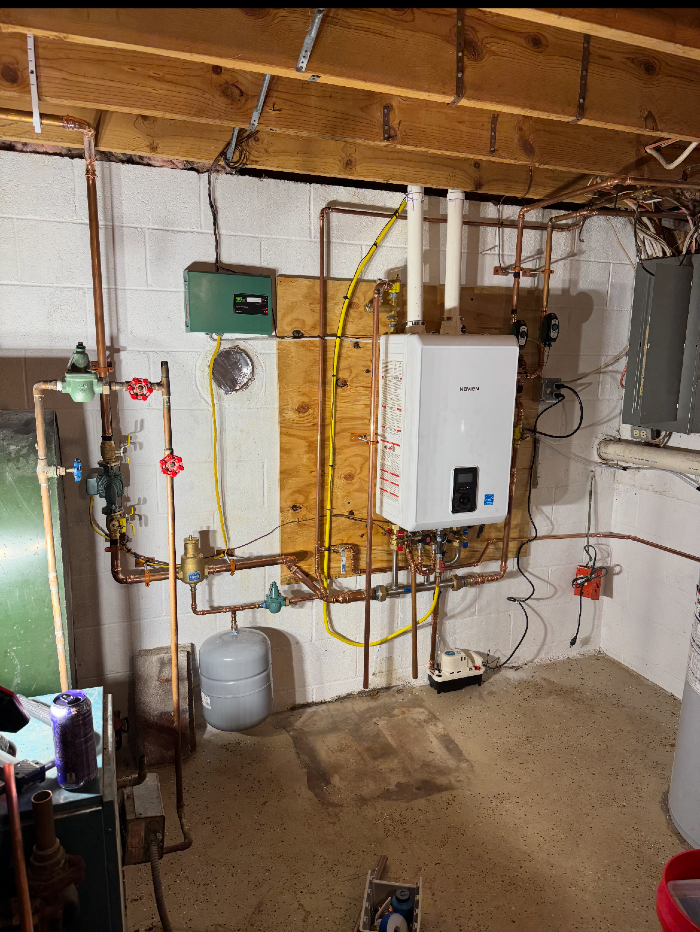
Navien combi-boiler replacement — Camp Hill, PA
Documented Metro HVAC Navien combi-boiler heating-system replacement in Camp Hill. The photo shows an actual installed project from Metro’s media library.
Heat pump installation
Documented Metro HVAC heat-pump installation image from our project library. Future project uploads will add location, equipment, scope, and commissioning details when verified.
What we document on future replacement projects
When project details are available, Metro will add equipment model, system type, municipality, the homeowner’s original problem, installation scope, corrections made, startup or commissioning checks, and completed-project photos. We will publish only details that can be verified from the job record.
Why we install Daikin
The warranty is one reason we like putting Daikin in front of homeowners
We are a Daikin Comfort Pro dealer. That gives our team direct access to Daikin residential equipment, dealer resources and training support—and it gives us a clear way to show you exactly which system and warranty are in the proposal.
On qualifying current Daikin furnaces and heat pumps, Daikin publishes a 12-Year Parts Limited Warranty. The important part is the fine print: where registration is required, it generally needs to be completed within 60 days of installation, and the exact terms can vary by model and state. We spell that out on the equipment we quote.
Some Daikin models may also include additional unit-replacement or heat-exchanger limited warranty coverage. Those benefits are model-specific and can include separate registration, maintenance, limitation and exclusion requirements. Metro will identify the exact warranty package for the proposed heat pump or heating-system replacement before installation.