Metro HVAC · Camp Hill heat pump estimate
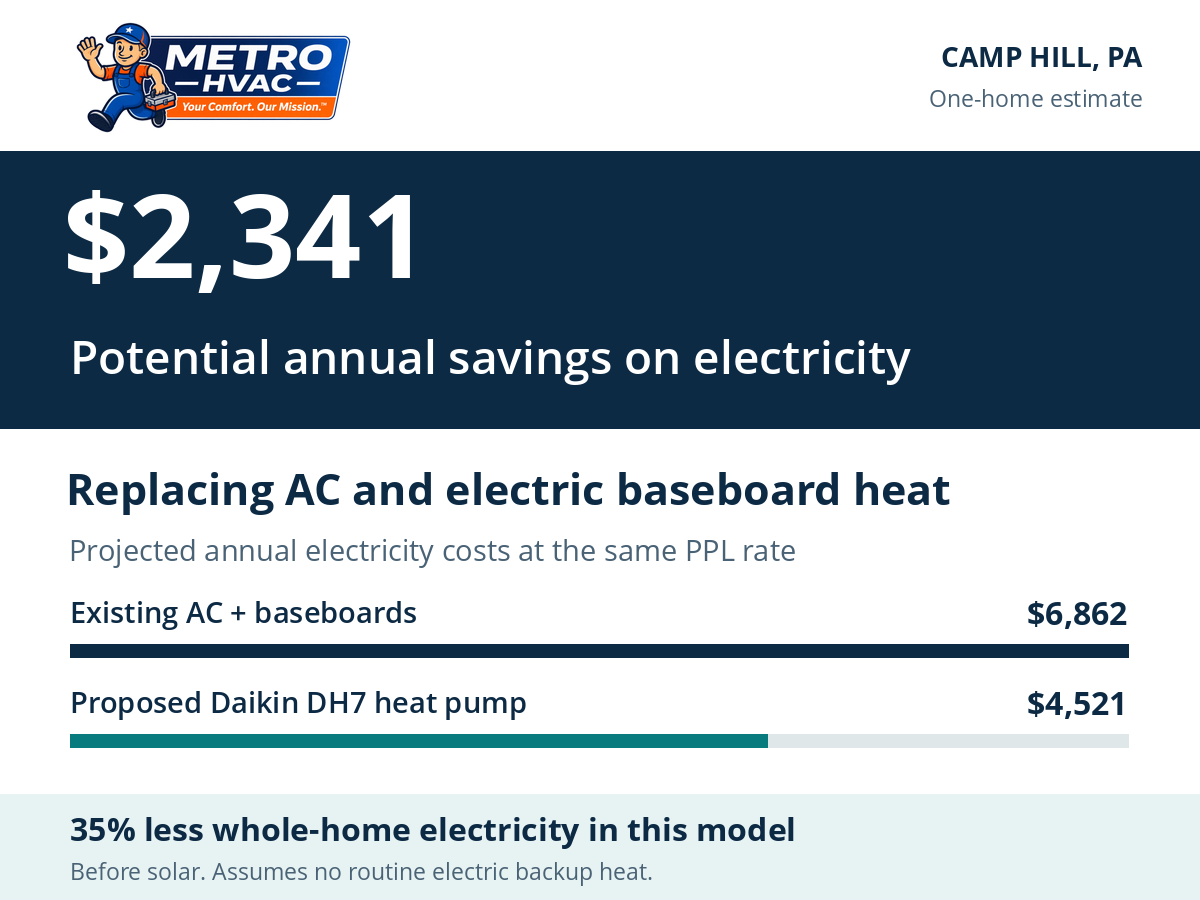
$2,341a year
Potential savings on this home’s electric bill by switching from baseboard heat to a heat pump.
For this Camp Hill homeowner, replacing the central AC was also a chance to lower the winter heating bill. Their January electric charges had topped $1,000. The AC cooled the house in summer, but electric baseboards did the expensive work of keeping it warm in winter.
We used 12 months of the homeowner’s PPL usage to compare their current setup with a proposed Daikin DH7VS heat pump. At the same electric rate, we estimated $6,862 a year with baseboards and $4,521 with the heat pump, before solar. The difference is the $2,341 shown below. Bills after installation will show how closely the estimate matches actual use.
What a year of PPL bills tells us
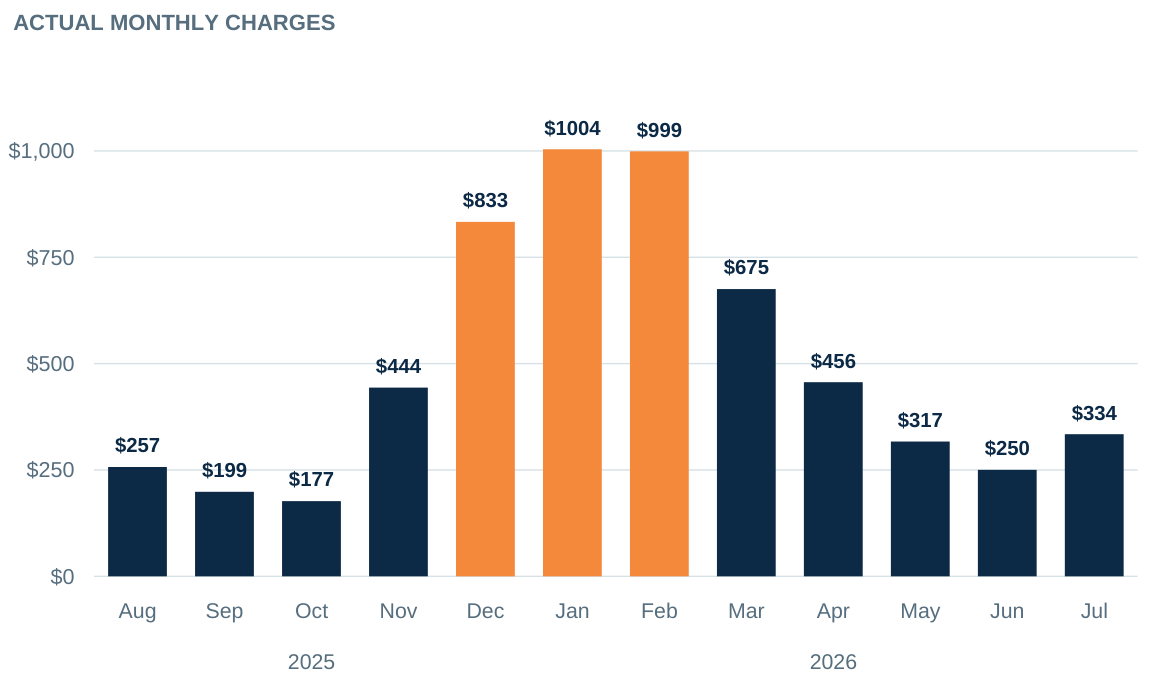
From August 2025 through July 2026, the home used 34,611 kilowatt-hours (kWh). Actual electric charges totaled $5,944.54. To see what the equipment change alone could save, we priced both systems using the July bill’s rates, about 19.3 cents per kWh plus $15.07 per month. That puts both options on equal footing across the full year.
January’s charges were about $1,004. October’s were $177. If you’re on budget billing, look for actual charges and monthly kWh on your statement. This homeowner’s $607 budget payment spread costs across the year and hid the winter peak.
| Whole-home electricity | Annual use | Annual cost at July rates |
|---|---|---|
| Existing AC and baseboards | 34,611 kWh, billed | $6,862, modeled |
| Proposed DH7 heat pump | 22,484 kWh, estimated | $4,521, modeled |
| Potential savings | 12,127 kWh (35%) | $2,341 (34%) |
Where the winter savings come from
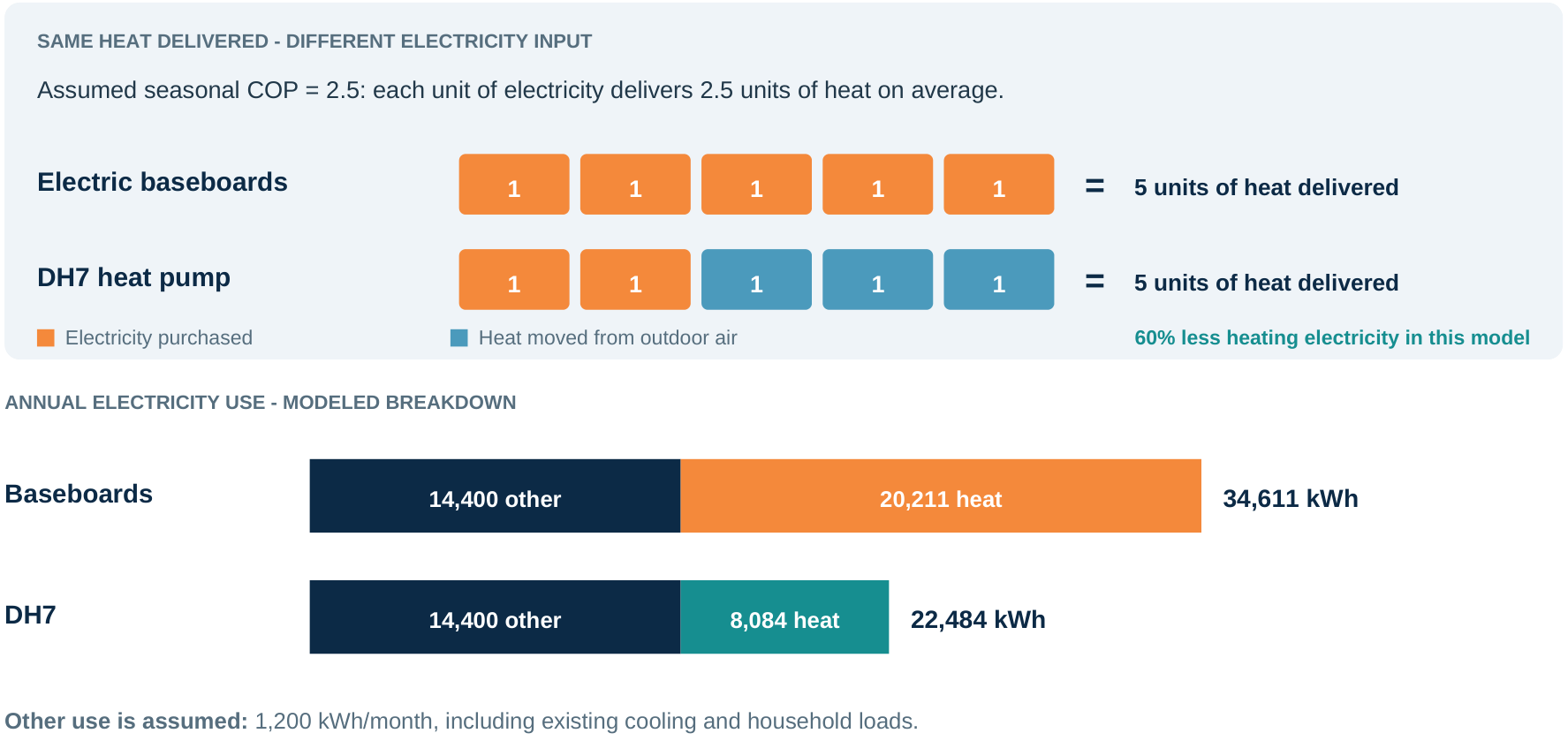
A baseboard turns electricity into heat right in the room. A heat pump uses electricity to move heat from outdoors into the house. For this estimate, we assumed the DH7 would deliver an average of 2.5 units of heat for every unit of electricity it used over the heating season.
PPL’s meter measures the whole house, so we had to estimate the baseboards’ share. We allowed 1,200 kWh a month for everything else, including summer cooling. That left about 20,211 kWh a year for baseboard heat. At the assumed efficiency, the DH7 would use about 8,084 kWh to deliver the same heat. We kept summer AC use the same in both calculations. All of the projected savings come from heating.
How much could the annual bill vary?
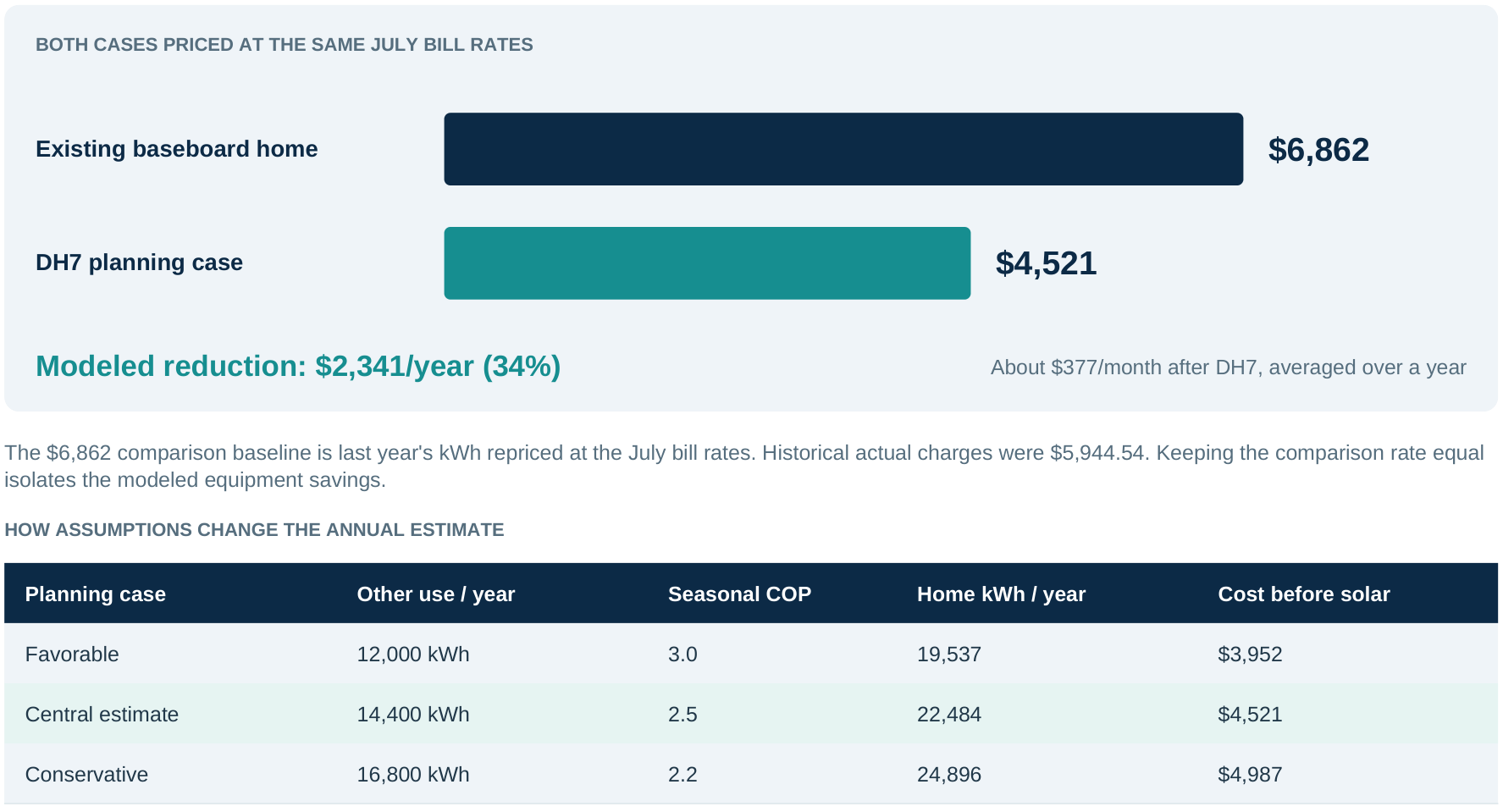
Using the same July electric rate, our three planning scenarios put the annual bill between $3,952 and $4,987 before solar. The middle estimate is $4,521, or about $377 a month averaged over the year. The range shows what changes when we vary the home’s other electricity use and the heat pump’s seasonal efficiency.
Can the heat pump keep the coldest room warm?
An AC that keeps the house cool in July tells us little about how much heat the back bedroom needs on a January night. Before recommending that the homeowner retire the baseboards, Metro calculates heat loss room by room, checks how much heat the selected indoor and outdoor units can deliver at Camp Hill’s winter design temperature, and checks whether the ducts can get enough warm air to each room.
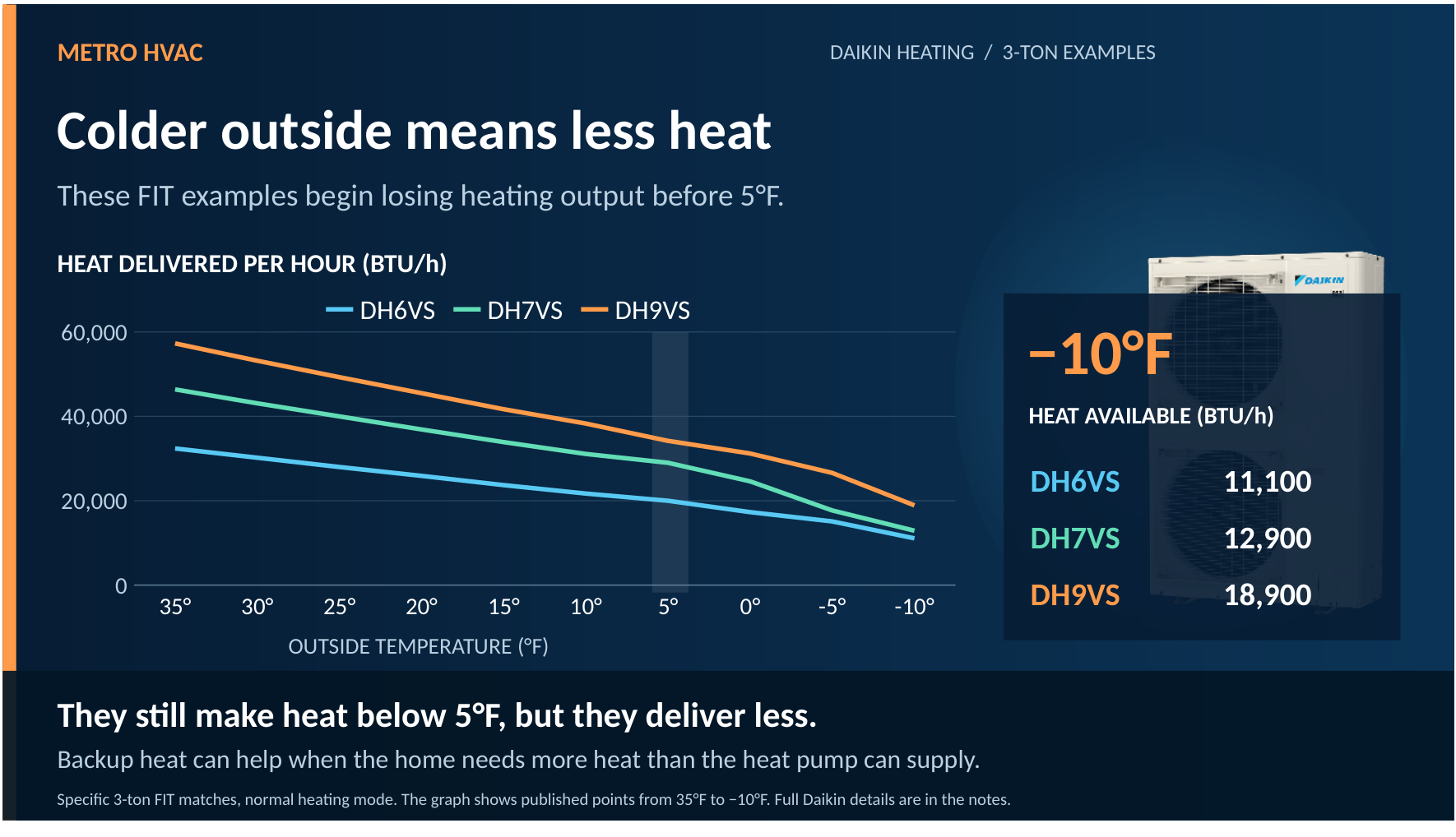
At 5°F, the specific three-ton DH7 pairing in the chart delivers 29,000 BTU per hour. At −10°F it delivers 12,900. That’s how much heat the equipment can supply in those conditions. Comparing that output with the home’s heat loss tells us when backup may be needed.
The $2,341 estimate assumes the heat pump can carry the load without routinely running electric backup. More backup use, a warmer thermostat setting, or a change in electricity rates would change the result. The figures cover electricity only. Installation, financing, and maintenance are separate.
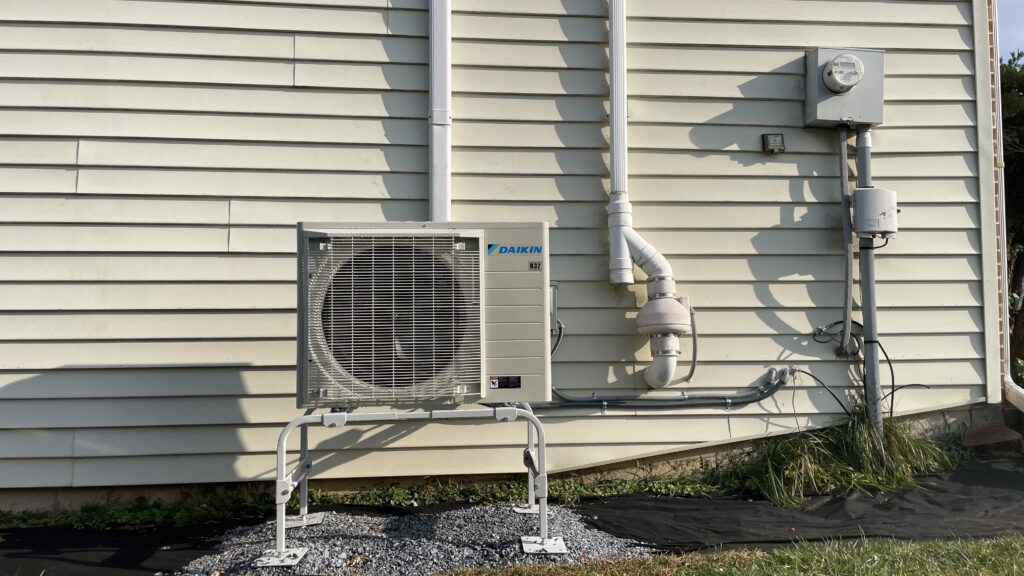
On a separate job in Mechanicsburg, our crew installed a Daikin DH7 with a custom sheet-metal plenum and attic ductwork to carry air to each room. See photos of Metro’s Mechanicsburg installation.
If I’m also considering solar, how many panels might I need?
Size solar around the electricity you expect to use after the heating upgrade. For this home, the starting point drops from 34,611 to about 22,484 kWh per year. At an assumed annual production of 1,200 kWh per installed kilowatt, the math points to about 18.7 kW of solar. The guide illustrates a 19.8 kW array made up of 44 panels at 450 watts each.
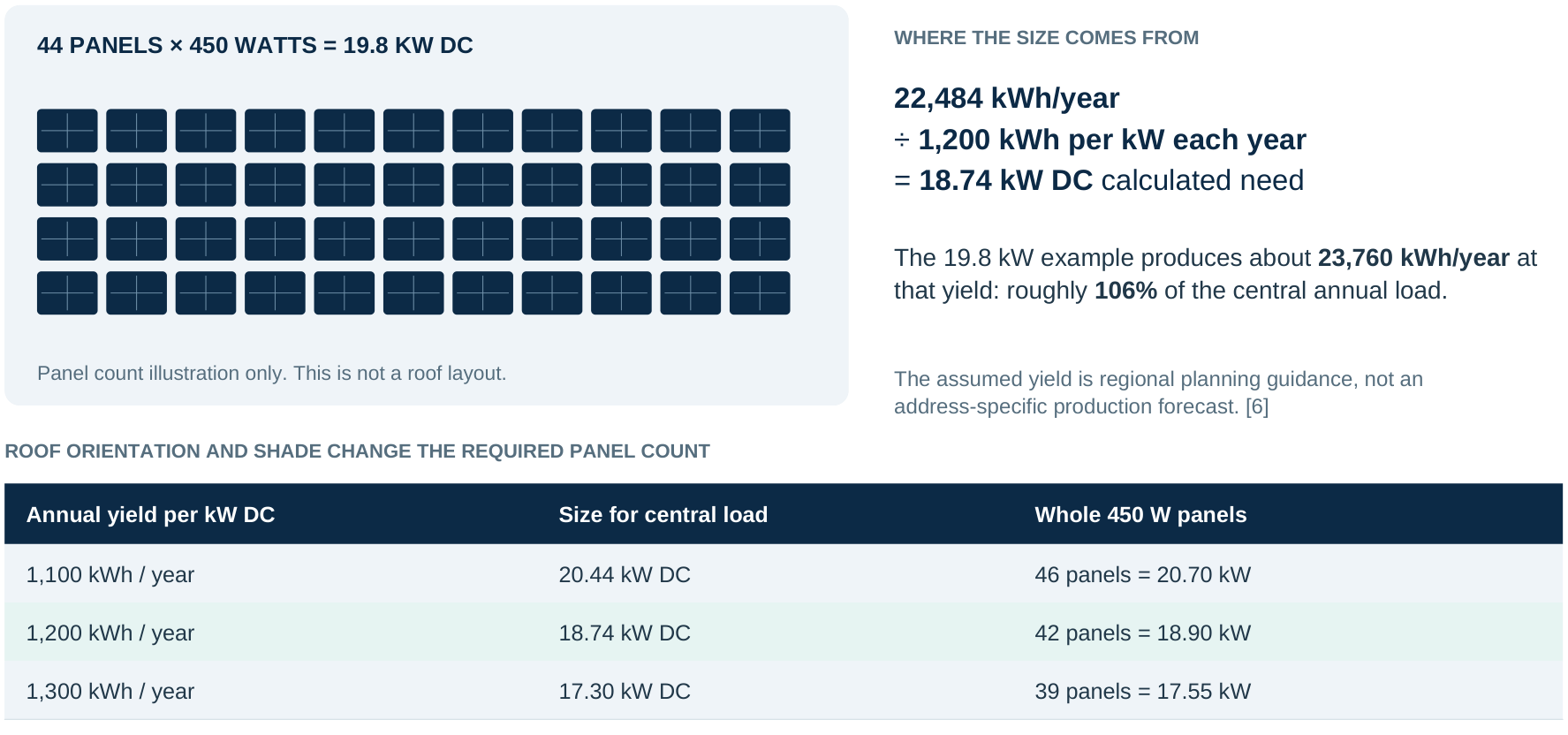
Shade, roof direction and usable space affect the final count. The roof needs a site survey and a production estimate. Even if the panels generate as much electricity as the house uses over a year, the home can still draw from the grid on winter nights. Fixed charges and the supplier’s credit terms also affect the bill.
What should I do first?
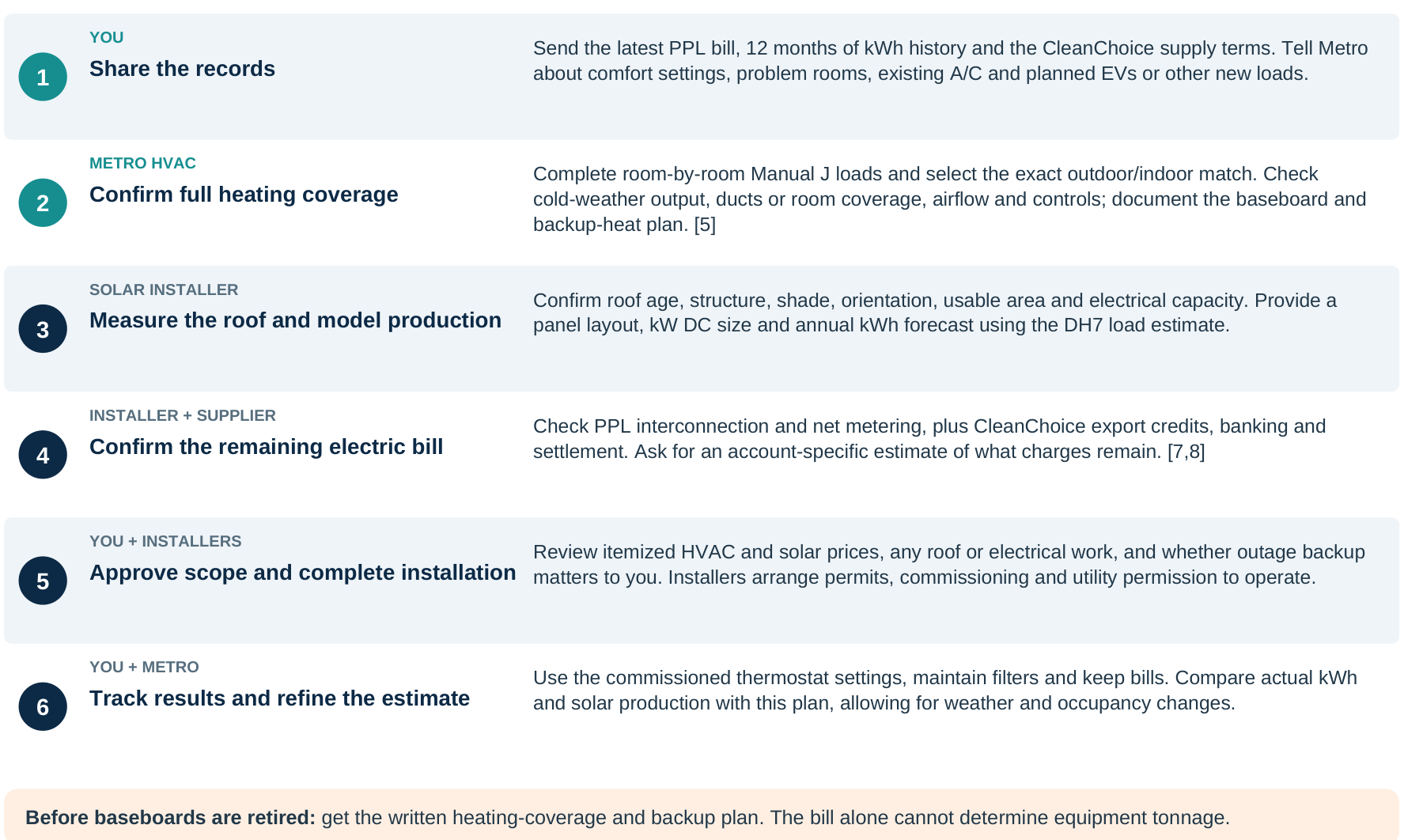
Start with 12 months of usage and a list of rooms that run cold. Metro checks room-by-room heat loss, the exact equipment pairing, and what the ducts can deliver. If you’re adding solar, have the installer model the smaller load and confirm the utility credits. After installation, compare kWh across similar weather and thermostat settings to see what your house actually saved.
Where the numbers come from
The starting point was this home’s PPL billing history from August 2025 through July 2026. Both cost estimates use the July statement’s $0.1930334 per kWh plus $15.07 per month. The heating estimate assumes 14,400 kWh annually for everything other than heat, seasonal heat-pump efficiency of 2.5, and no routine resistance backup. Manufacturer output is specific to the equipment pairing. Daikin DH7 specifications · Cold-climate heat pump sizing guidance.
What could a heat pump save at your house?
Start with a free in-home evaluation and a written estimate from Metro HVAC. If your AC is due for replacement or electric baseboards are driving up winter bills, we’ll help you see whether a heat pump makes sense for your home. Here’s how we build a comparison you can understand.
1. Start with your bills and comfort concerns
Have 12 months of electric bills or your utility’s monthly usage history ready. We review kWh, rates and seasonal changes, then ask about thermostat settings, rooms that run hot or cold, and how you use your existing heating and cooling systems.
2. Look at the house, equipment and airflow
During the visit, we inspect the existing system, review accessible ductwork and electrical requirements, and gather the measurements and home details needed for a heating and cooling load calculation. That helps Metro design the system around your home’s needs.
3. Show you the potential savings and cold-weather performance
Using your usage history and clearly stated assumptions, we prepare a side-by-side estimate of electricity use and operating cost at the same utility rate, like the charts in this article. We also compare the proposed equipment’s manufacturer-rated output in cold weather with the home’s calculated heating needs and explain when backup heat may be needed. If you’re replacing AC, we can compare an AC-only replacement with a heat pump that provides both heating and cooling.
4. Give you a clear installation estimate
You’ll receive written equipment options and an installation scope explaining the work Metro recommends. We’ll walk through the estimated savings, the assumptions behind them and what could change the result. After installation, your utility usage can be compared across similar weather and thermostat settings to check actual savings.
The evaluation and estimate are free, with no obligation. Savings are projections, not a guarantee; your home, rates, weather, settings and backup heat use all affect the outcome.
Tell us you’d like a heat pump savings evaluation in the request form, or call (717) 874-2030. Metro HVAC serves Camp Hill and surrounding Central Pennsylvania communities.