Metro HVAC · From the field
Lemoyne, PennsylvaniaThe call started the way a lot of boiler calls do: water on the floor behind the boiler. A homeowner in Lemoyne, PA wanted to know where it was coming from and how to stop it. The leak turned out to be a symptom. The real problem was a small part most people never think about: the expansion tank.
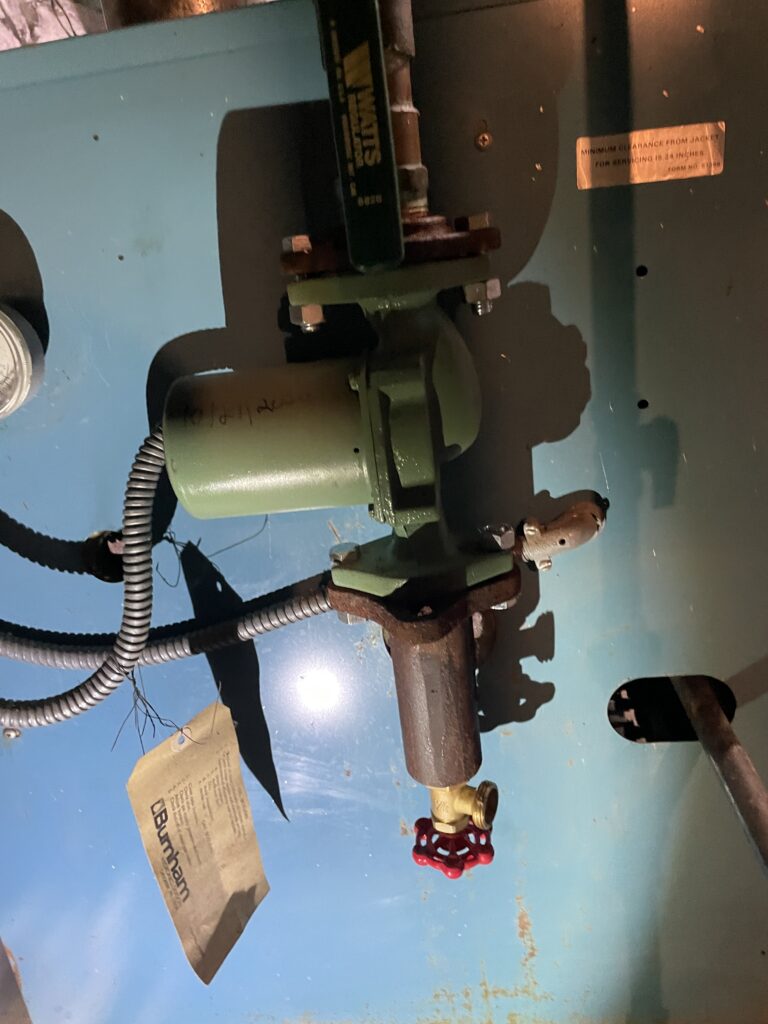
What we found behind the boiler
Steven found water coming from two places. A failed vent behind the boiler was letting water out, and the pressure relief valve on the boiler itself was discharging. The pressure gauge explained why: the system was running above 30 psi. Residential boiler relief valves are commonly set to open at 30 psi, so the valve was doing exactly what it is designed to do.
High pressure on a hot-water system usually points to the expansion tank. Steven knocked on the tank, and instead of the hollow sound of an air cushion, it sounded full. The tank was waterlogged.
Why a waterlogged expansion tank causes leaks
Water expands as it heats. In a closed hot-water heating system, the expansion tank gives that extra volume a place to go. Most tanks hold a cushion of air on one side of a rubber diaphragm, with system water on the other. When the air charge leaks down or the diaphragm fails, the tank fills with water and can’t absorb anything. Every time the boiler fires, pressure climbs until something gives, usually the relief valve or a weak vent or fitting.
The relief valve is a safety device. If it is discharging, never cap or plug it. Call for service instead.
A second problem: the circulator pump
While he was there, Steven checked the circulator pump to make sure water was moving through the system the way it should. The pump was rusting and starting to corrode. It hadn’t failed yet, but it was headed that way.
Replacing either the tank or the pump means shutting the system down, draining it and bleeding the air back out afterward. Doing both on the same visit meant the homeowner only paid for that work once, instead of having the system opened up again down the road when the pump quit. The homeowner agreed, and the crew replaced both.
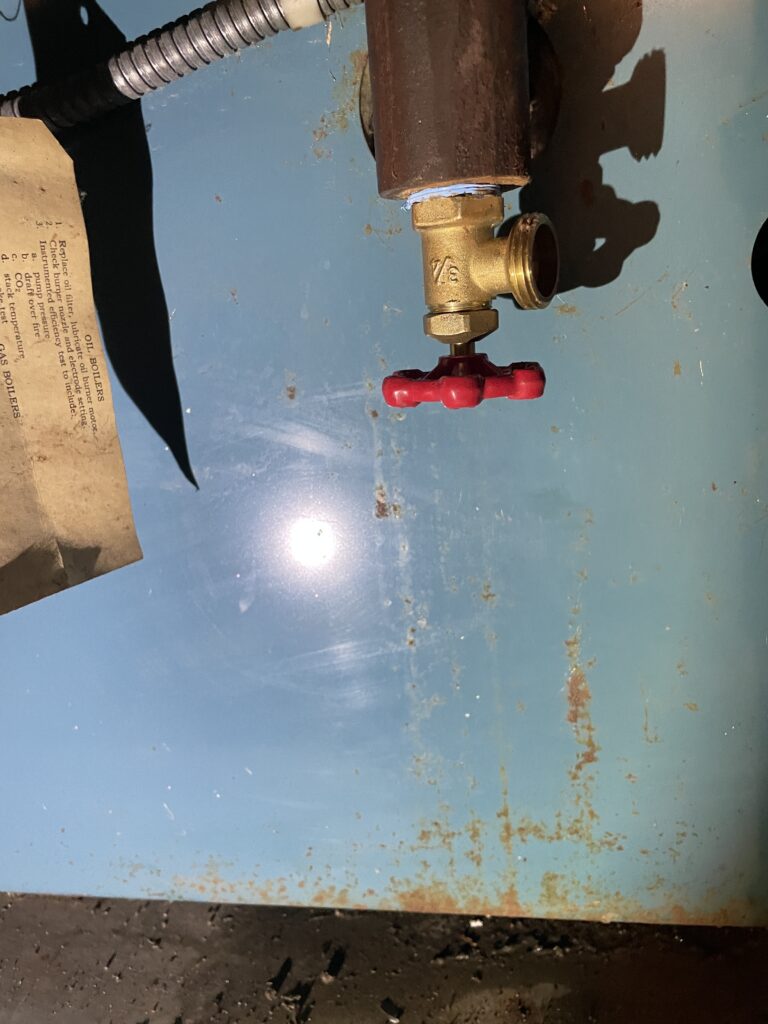
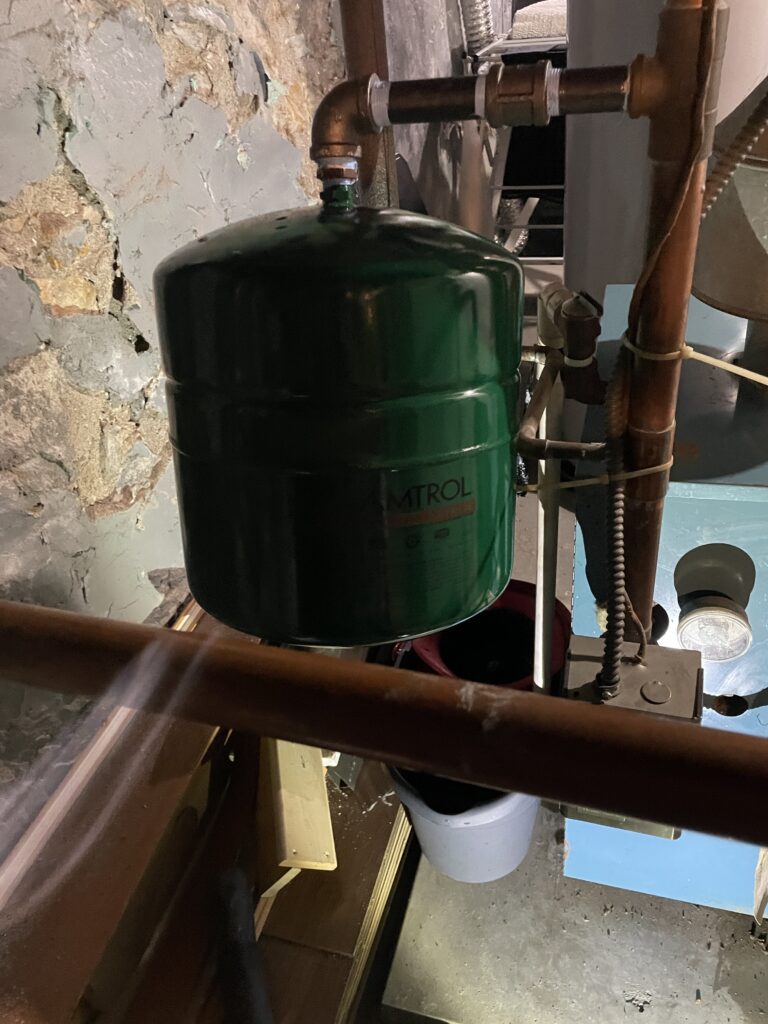
Our boiler repair in Lemoyne
- Replaced the waterlogged expansion tank. We used a geothermal-rated expansion tank. It’s rated to 250°F, far above the 180°F this boiler will ever see, and in our experience these tanks hold up better over time against the minerals and contaminants in municipal water around Camp Hill and Lemoyne. It’s the tank we prefer for boiler systems.
- Remounted the tank the right way. The original tank had been mounted upside down. We reconfigured the piping so the new tank is mounted in the proper orientation.
- Replaced the failed vent behind the boiler that had been letting water out.
- Replaced the corroding circulator pump while the system was already drained.
- Replaced the boiler drain valve. During the work, the existing drain valve would no longer hold and couldn’t be rebuilt, so it was replaced as well.
- Refilled the system, bled the air out and checked that pressure stayed in a normal range as the boiler heated up.
Signs your boiler expansion tank is failing
- Water on the floor near the boiler, or a relief valve that drips or spits.
- The pressure gauge climbs toward 30 psi when the boiler is hot.
- You keep adding water to the system.
- Rust or weeping on or around the tank.
An expansion tank is an inexpensive part compared to the boiler it protects. If you have hot-water heat and see any of these signs, have it checked before a small leak turns into a bigger repair.
See our boiler repair service, heating repair in Lemoyne, or all of our HVAC services in Lemoyne.
Water around your boiler in Lemoyne?
Metro HVAC serves homeowners across Cumberland, Dauphin, Lebanon and northern Lancaster counties. Give us a call or send a request and we’ll get you on the schedule.
Call (717) 874-2030Request service online BBB Accredited BusinessDaikin DealerPA HIC #PA181988
Your Comfort. Our Mission.